
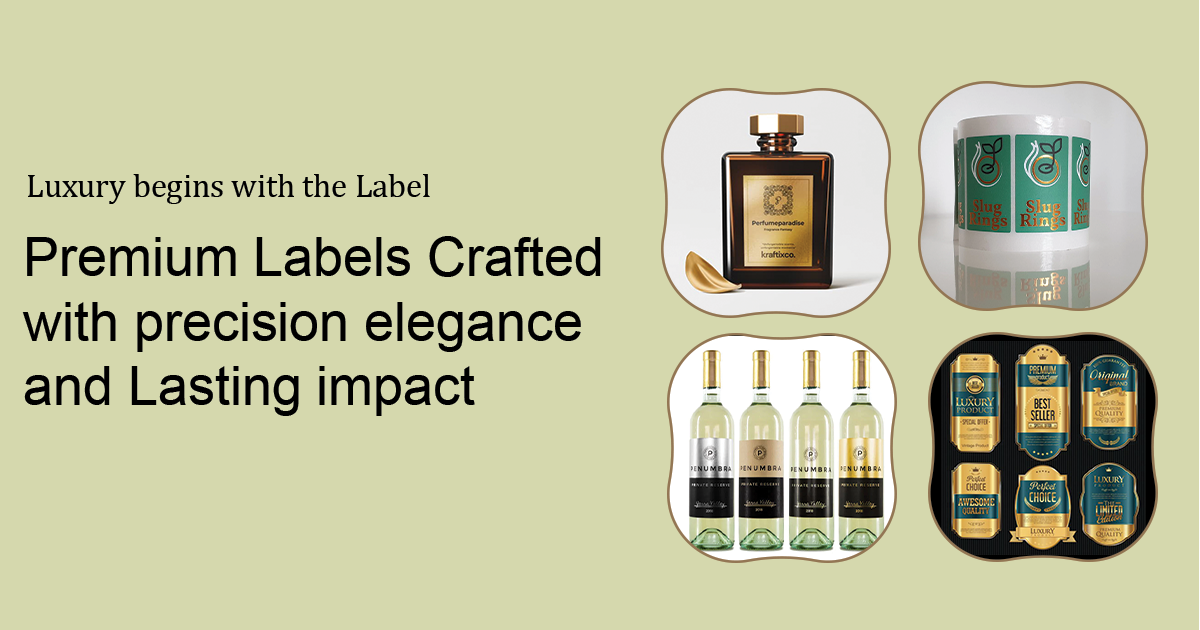
Luxury brands aren’t built on products alone; they’re built on perception. And in today’s hyper-competitive market, a label is often the very first thing customers notice before they even pick up your product.
Behind-the-scenes label manufacturing is not just about printing; it’s about craftsmanship, material science, design precision, and advanced technology working together. From the texture of the paper to the shine of the foil, every detail tells your brand’s story.
In this article, we’ll take you on a step-by-step journey into how premium labels are made, revealing the blend of creativity, engineering, and quality control that turns simple stickers into luxury brand ambassadors. Whether you’re a business owner, packaging designer, or printer, understanding this process could transform how your brand is perceived.
Why Premium Labels Matter in a Competitive Market
Think about the last bottle of wine, skincare cream, or box of chocolates you purchased. Chances are, the label influenced your decision as much as the product itself. That’s the hidden power of premium labels: they shape perception before the first sip, application, or bite.
In crowded shelves and digital-first marketplaces, labels serve as silent salespeople. They communicate luxury, trust, and exclusivity at a glance. A foil-stamped crest, a textured paper stock, or an embossed logo signals to consumers that the brand behind it values quality and attention to detail.
Research in consumer psychology shows that people often equate “premium look” with “premium quality.” For industries like wine, cosmetics, and gourmet foods, the right label can increase both perceived value and actual sales.
But to truly understand why premium labels are so powerful, we need to look at what goes into making them.
Step 1 – Creative Planning & Design
Every premium label begins with a story. Designers, marketers, and printing experts collaborate to translate a brand’s identity into visual language. Fonts, colors, icons, foil accents, and embossing effects are carefully chosen to reflect the brand’s personality, elegant, bold, sustainable, or innovative.
For example, a cosmetic brand may choose a soft-touch matte background with subtle gold foil highlights to convey elegance and sophistication. A craft brewery might go for textured paper with bold, raised typography to emphasize authenticity.
The creative phase sets the foundation for everything that follows, because no matter how advanced the printing, a poorly designed label can never convey luxury.
Step 2 – Material Selection: Building Luxury from the Base
A premium label isn’t built on ink alone — it begins with the right material. Standard paper stocks may suffice for everyday products, but premium brands demand substrates that not only look good but also feel distinct.
Options include:
- Textured papers that mimic fabric or handmade artistry.
- Metallic foils for shine and sophistication.
- Transparent films for sleek, modern looks.
Material choice directly affects durability and perception. A high-end whiskey label must resist moisture and scuffs, while a luxury skincare label must feel soft yet withstand oils and creams.
Packaging companies in the USA and India increasingly request custom premium labels that survive diverse climates, from humid tropics to dry retail shelves. In short, the right substrate builds both resilience and luxury from the ground up.
Step 3 – Advanced Printing Techniques
Once design and material are set, the magic of printing begins. The method chosen, offset, digital, or flexographic printing, depends on production volume and design complexity.
What sets premium labels apart are the finishes:
- Foil Stamping: Gold, silver, or holographic foils reflect light, creating instant shelf appeal.
- Embossing/Debossing: Raised or recessed textures add tactile depth, making logos feel carved into the label.
- Spot UV Coating: Glossy highlights contrast beautifully with matte surfaces, guiding the customer’s eye.
These finishes transform a flat design into a multi-sensory experience.
Advanced techniques require precision. Even a slight misalignment in foil stamping can compromise the label’s value. That’s why craftsmanship and machine accuracy are equally vital in luxury label production.
Step 4 – Smart & Variable Data Printing
Premium labels aren’t only about appearance anymore — they’re becoming interactive. Variable data printing (VDP) allows each label to carry unique QR codes, serial numbers, or barcodes.
Applications include:
- Authentication: Pharmaceutical brands use serialized labels to combat counterfeiting.
- Personalization: FMCG companies print customer names or unique promo codes.
- Engagement: Coffee brands link QR codes to farm-to-cup storytelling videos.
By merging tactile luxury with digital interactivity, smart printing future-proofs premium labels.
Step 5 – Quality Control: The Perfection Check
Luxury demands perfection. Before premium labels ever leave the production floor, they undergo rigorous quality control (QC).
QC teams inspect for:
- Color consistency across batches.
- Foil alignment to ensure shine lands where intended.
- Emboss depth for tactile uniformity.
- Durability testing, including moisture, scratch, and rub resistance.
In premium markets, a single misprint can instantly devalue an otherwise flawless product. Imagine a luxury perfume with misaligned foil — the perception of “luxury” collapses.
Step 6 – Finishing & Delivery
Once labels pass inspection, they enter the finishing stage. Here, precision tools cut, die-cut, or trim labels into exact shapes.
They may be delivered in rolls, sheets, or custom packaging, depending on how clients apply them. For high-speed bottling plants, labels must be delivered in rolls with precise tension. For artisanal brands, flat sheets may be more convenient.
By the time premium labels leave the press, they’re no longer “stickers.” They’ve become ambassadors of the brand, carrying its essence, values, and story into every retail shelf or online unboxing moment.
Behind-the-Scenes Storytelling: Inside a Production Floor
Imagine stepping into a premium label facility. Designers sketch ideas on glowing screens while marketing teams debate foil shades that best reflect the brand story.
On the production floor, machines hum as metallic foils stamp onto textured papers with precision. The smell of ink mixes with the sound of rollers pressing tactile finishes. QC teams, wearing gloves, carefully examine every batch under bright lights, checking for alignment, clarity, and durability.
Each corner of the facility reflects a combination of technology and craftsmanship. It’s not just about machines — it’s about people ensuring that every label leaving the floor meets luxury standards.
This behind-the-scenes journey reminds us that premium labels are crafted, not churned. At Sai Impression, technology meets artistry to deliver labels that elevate every brand.
Case Studies & Industry Applications
Premium labels are versatile across industries:
- Food & Beverages: A vineyard uses foil embossing on wine bottles, boosting shelf presence in high-end retailers.
- Cosmetics: Luxury creams packaged with soft-touch matte finishes and gold foil convey elegance.
- Luxury Products: Perfumes use holographic labels that reflect exclusivity while preventing counterfeiting.
- Promotions: FMCG brands add scratch-and-win labels with smart codes for customer engagement.
- Pharmaceuticals: Variable data and tamper-proof seals ensure compliance and trust.
Each case shows how custom premium label printing can drive not just sales, but loyalty. Labels don’t just decorate products; they differentiate brands in fiercely competitive markets.
From wine cellars to luxury boutiques, the right label can be the silent brand ambassador that makes consumers choose your product over another.
Conclusion – From Craft to Conversion
Premium labels are more than decorative stickers. They’re the result of a meticulous process combining design, material selection, advanced printing, variable data, QC, and finishing.
Luxury is in the details. And in a world where consumers make split-second purchase decisions, your label tells your story before customers even open the box.
At Sai Impression, we don’t just print labels, we craft luxury experiences.
Looking to create premium labels in the USA or India? Contact our printing experts today and discover how we turn labels into powerful brand assets.
FAQ
What are premium labels made of?
Premium labels use textured papers, metallic foils, transparent films, and specialty coatings.
How is a luxury label different from a standard label?
Luxury labels feature advanced finishes like foil stamping, embossing, and high-end substrates.
What printing techniques are used in premium label production?
Offset, flexographic, and digital printing combined with finishes like foil, emboss, and spot UV.
Why are premium labels important for branding?
They enhance perceived value, build trust, and differentiate products.
How long does it take to produce custom premium labels?
Production varies, but most projects take 2–4 weeks, depending on complexity and volume.


