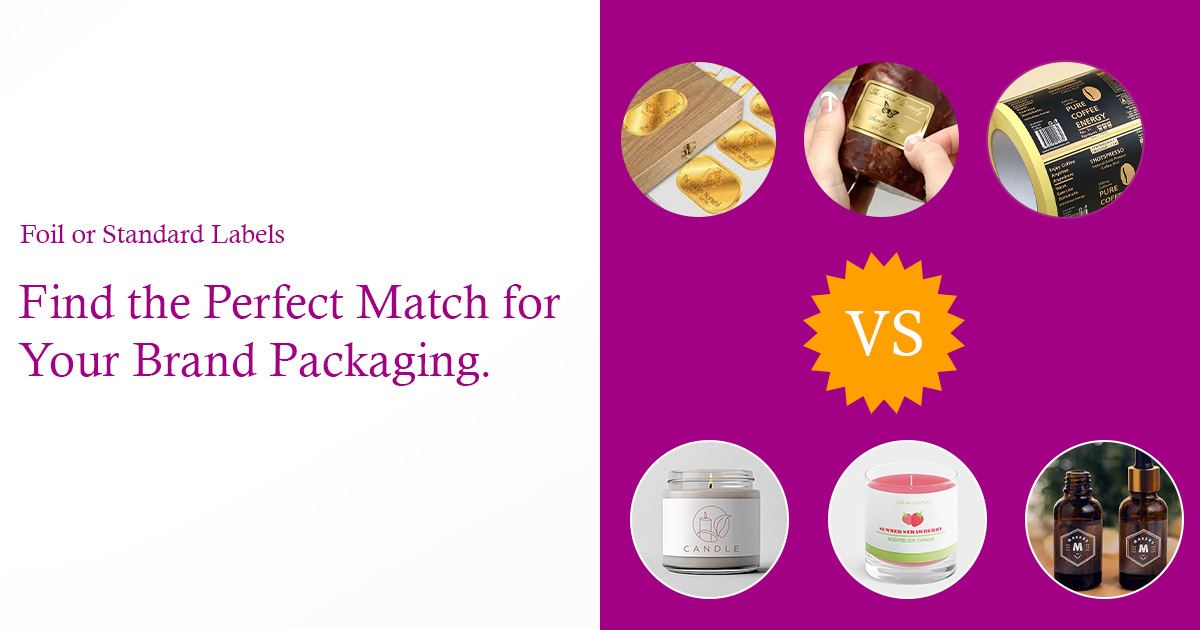
Let’s be honest: a potential buyer can tell if something is high-end or low-end within seconds. Research from Miller Zell shows that 76% of first product impressions are based on packaging design, and the label is often the focal point.
Your target market, price range, and quality level are all communicated through the label you choose. This isn’t just a decorative afterthought; it’s a core branding decision.
The daily dilemma for businesses? The dependable adaptability of standard labels vs. the prestige and allure of foil labels. One signals affordability and versatility, while the other whispers luxury and craftsmanship.
So, which should you choose for your brand, your product, and your budget? Let’s break it down.
Understanding the Basics - It’s More Than Just Shiny vs. Matte
Before we begin, let’s explain a few terms. There are two distinct manufacturing theories at work here, and they extend beyond appearances.
Foil labels are the greatest solution for achieving that “wow” effect. They are created by applying a thin coating of metallic film to the label material using a technique known as hot foil stamping, sometimes known as digital foil. The overall result is a surface that simply exudes quality, bright, reflecting, and frequently tactile. They are premium labels by definition.
The dependable workhorses are known as standard labels. When printed directly onto paper or synthetic materials using techniques such as digital or flexographic printing, they generate vibrant, full-color designs with no metallic sheen. They will not reflect like a mirror, but they may be glossy, matte, or even textured.
When Foil Labels Shine (Literally)
There’s a reason why luxury brands have used foil for decades. It offers nearly alchemical perceptual value.
- A foil label rapidly elevates a product’s perceived value. It represents attention to detail, uniqueness, and craftsmanship. High-end spirits, boutique cosmetics, and artisan cuisine are examples of luxury items that cannot be bargained for. It makes a product look to be a gift.
- Constructed to Last: Foil is not only gorgeous but also long-lasting. It is very resistant to fading, dampness, and scratches thanks to a protective coating. This makes it excellent for products that must withstand handling, such as high-end beverages, or those that are stored in humid environments, such as restrooms.
- Shelf Presence: A foil label stands out in a crowd of competitors. It makes your goods stand out because it attracts the light and the eye. Even before a single word is read, it exudes distinction.
If your brand story centers on exclusivity, tradition, or superior quality, foil isn’t an expense; it’s an investment.
When Standard Labels Are the Smarter Choice
Not every product needs to sparkle. Standard labels excel in practicality.
For countless products, standard labels are the undisputed champion of smart, effective packaging.
- Cost-Effective: They provide professional quality at scale without stretching budgets.
- Design Freedom: With no metallic constraints, full-color illustrations, photography, or bold typography are easy to achieve.
- Eco-Friendly Options: Standard labels are available in recycled and compostable materials, aligning with today’s sustainability-conscious consumers. (McKinsey Packaging Survey, 2023: 70% of consumers prefer recyclable packaging.)
For FMCG, everyday pantry goods, or minimalist, eco-friendly brands, standard labels are often the best fit.
Side-by-Side Comparison: Foil vs. Standard Labels
| Feature | Foil Labels | Standard Labels |
| Visual Appeal | High, luxury feel, reflective | Functional, versatile, excellent for full-color graphics |
| Durability | Very high (resistant to fading, moisture, and scratches) | Moderate (can be upgraded with protective lamination) |
| Cost | Higher | Lower |
| Best For | Premium/luxury brands, limited editions, gifts | Mass-market goods, budget-conscious runs, high volume |
| Printing Options | Foil stamping, spot foil, digital foil | Digital, flexographic, offset |
Printing & Design Tips from the Pros
Foil Labels:
- Contrast is King: Pair metallic elements with matte backdrops.
- Use as Accents: Highlight logos, borders, or one elegant word.
- Engage Touch: Hot foil stamping creates a tactile, debossed feel.
Standard Labels:
- Go High-Res: Use sharp imagery and bold color palettes.
- Protect It: Add matte or gloss lamination for durability.
- Leverage Color Psychology: Use bright, energetic colors to stand out.
Conclusion: Which One Is Right for You?
- Choose Foil: When luxury, durability, and premium storytelling matter.
- Choose Standard: When scalability, flexibility, and budget-friendliness are key.
Your label is your silent salesperson. Make sure it’s telling the right story.👉 At Sai Impression, we help brands across the USA and India find the perfect balance between cost and quality. Request a free sample set today and see the difference for yourself.
FAQ
How do I choose between foil and standard labels?
Choose foil labels if you want a premium, eye-catching look for luxury or gifting products. Choose standard labels if you need a cost-effective, versatile option for everyday packaging. Your choice depends on your brand style, budget, and durability needs.
Do foil labels increase sales?
Yes, studies show premium packaging increases purchase intent. It’s most effective when a higher perceived value justifies a higher price point
Can I print barcodes on foil labels?
Absolutely. We use contrasting matte/white zones to ensure barcodes are scannable.
What products work best with standard labels?
Everyday consumer goods, high-volume pantry staples, eco-conscious brands, and products with short shelf lives.