Edible oil labels
Oil-proof labels for edible oil bottles
Film labels that resist oil stains and peeling on sesame, groundnut, coconut and cold pressed oil packs, with FSSAI artwork support.
- Oil-resistant film
- Cold-rated adhesive
- Export ready
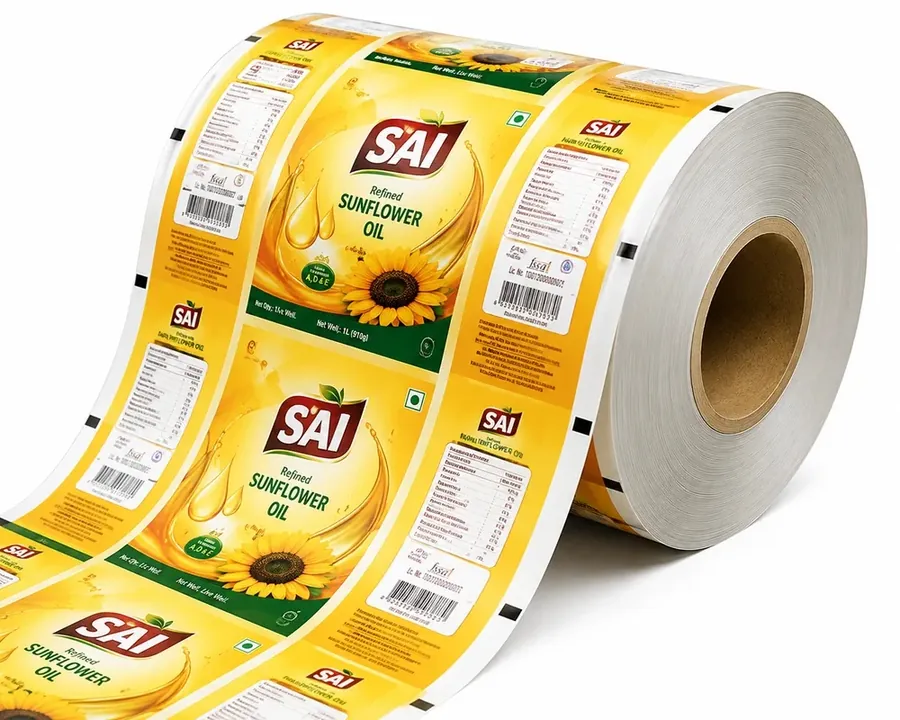
- Since 2010On our own digital and flexo presses
- 1000+ brandsSupplied in India and 25+ export countries
- Roll formWound to suit your applicator
- Chennai, Bangalore, PondicherryHead office and production units
The label problem few brands talk about openly
The edible oil industry has a label problem few brands talk about openly: oil migrates. It moves from the bottle through the adhesive into the face stock, and over time the label darkens, loses its grip, or lifts at the edges. Coconut oil adds a second problem: it solidifies below about 24 degrees and liquefies again above it, and every cycle puts fresh stress on the adhesive.
At Sai Impression And Packaging Solutions we have supplied labels to edible and virgin oil brands across South India for years. We know which materials hold up against oil over time and which ones only look good on the roll. Everything we supply for this segment is printed on our own digital and flexo presses and delivered in roll form, built for your automatic bottle labelling line.
The oil migration problem
Oil migration is not a packaging defect. It is a basic materials reality. The oil inside the bottle, the adhesive on the label, and the face stock itself are all made of compatible molecules, and over weeks the oil quietly works its way through. The right label is not one that stops this. The right label is one that is engineered to look the same even while it happens.
That means a face stock the oil cannot discolour visibly, an adhesive that stays bonded despite oil contact, and a print finish that does not yellow or cloud.
If your current label is already darkening, lifting at the edges, or losing colour, send us your current label for review and we will recommend a stack that fixes it.
Temperature swings for coconut oil
Most coconut oil label failures are not from the oil itself. They are from the cycle of solidification and softening, which puts stress on the adhesive and on the face stock. A standard permanent adhesive that performs beautifully on a room temperature bottle can let go after six temperature cycles.
The answer is a face stock and adhesive combination rated for cold use, plus a lamination that does not crack when the bottle is handled in its solid state. We specify this stack by default on coconut oil bottles, not as an upgrade.
Materials that hold on oily surfaces
For edible oil bottles, we typically recommend a PP film face stock with an oil-resistant adhesive and a lamination that seals the print. Paper is only an option for specific premium looks, and only with a barrier coating. A clear, no-label look is possible too, but it needs the right formulation to stay crystal clear against an oily bottle. More on film options on our BOPP labels page.
All of this is supplied in roll form for bottles, sized to your format and your labelling line; tins, jars and short runs can be supplied in sheet form instead. Running a line by hand? See our label applicator machines.
The oil-proof label stack
- Sealing laminationDoes not yellow or cloud
- PP film, printedThe oil cannot visibly discolour it
- Oil-resistant adhesiveStays bonded despite oil contact
- LinerRoll form for your bottle labelling line
Labels for export brands
If you are exporting edible oil, the label is doing three jobs at once. It carries your brand. It meets the destination country's labelling rules. And it survives sea freight, which means weeks inside a container with temperatures that swing hard. We have supplied labels for export shipments from Chennai port and are familiar with the practical materials choices that hold up through this journey.
For export brands we also help structure the artwork so that destination-specific information (US FDA nutrition panel format, EU allergen rules, Arabic right-to-left layout for Gulf shipments) is designed in from the start rather than retrofitted. It is cheaper to plan this at the artwork stage than to reprint later. More on our export labelling page.
Multilingual and regulatory capability
Edible oil labels frequently need two or three languages on a single face. Tamil, Malayalam, and English for South India shipments. English plus Arabic for Gulf. English plus a destination language for European private label contracts. We handle all of this routinely, and will flag layout issues early if the languages do not fit cleanly at a reader-friendly size.
On regulatory, we advise on FSSAI packaged food label requirements for the Indian market, and will flag obvious issues against common export destination rules. Legal responsibility stays with your brand and your chosen regulatory consultant, but we do not quote on artwork that is clearly missing required elements. MRP, batch number and manufacturing date usually change with every batch: most brands leave a clear area for their own coder to overprint this, though it can also be printed as unique variable data if you want us to handle it.
Labels + applicator
One partner for the label and the machine that applies it
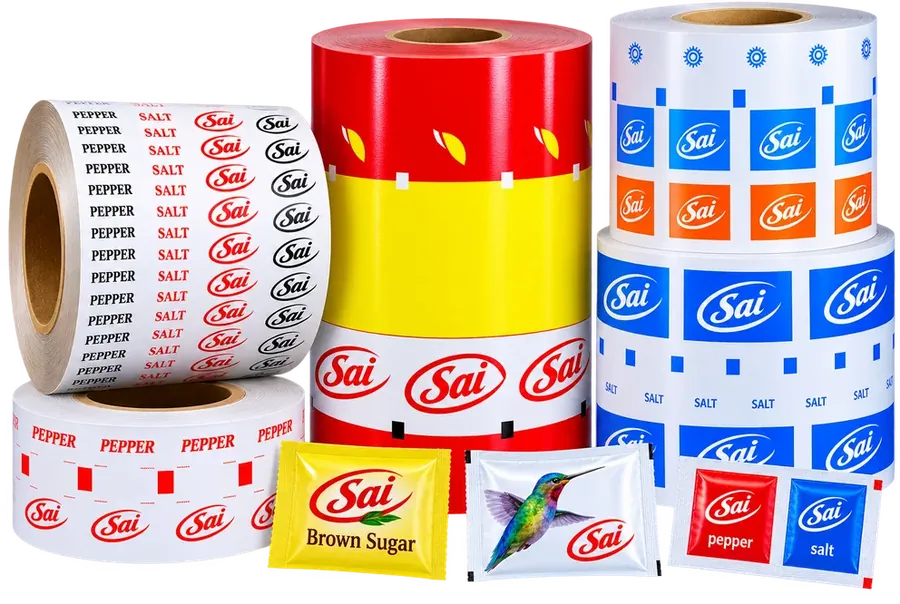
Beyond the labels, we also supply the applicator machine that puts them on your oil bottles, round or square, with installation and AMC service support. One supplier for the label, the machine, and the upkeep that keeps your filling line running, from artwork sign-off to the bottle leaving the line labelled.
Why oil brands switch their labels to us
Most edible oil brands reach us after a reprint, a shipment held up over artwork, or a label that darkened sooner than expected. Here is what changes once the account moves to Sai Impression And Packaging Solutions.
- 01
Nothing is printed until you approve it
You see a proof of the artwork and the recommended material before the job runs, so moving printers does not risk a wasted batch on your filling line.
- 02
FSSAI artwork review comes with the quote
We check mandatory declarations against current FSSAI packaged food labelling requirements during artwork review, not as a separate paid step.
- 03
A switch does not have to leave a supply gap
Send us your current label for review along with your reorder cycle, and we plan the first run to land before your existing stock runs out.
- 04
One supplier for India and export runs
The same artwork process builds in Tamil, Malayalam or Arabic text and destination labelling rules, so you are not running two label vendors for two markets.
Edible oil label FAQ
Not answered here? and we reply within one working day.
Why do edible oil labels darken or lift over time?
Oil migration. The oil moves from the bottle through the adhesive into the face stock over weeks. The fix is a matched stack: a face stock the oil cannot visibly discolour, an oil-resistant adhesive that stays bonded, and a lamination that does not yellow or cloud.
The bottle gets a film of oil on the outside during filling and capping. Will the label still stick?
That is a different problem from long-term oil migration: it is surface contact at the moment of labelling, not slow absorption. Tell us about your filling and capping process, and how much oil typically reaches the bottle exterior, and we will factor it into the adhesive choice and the labelling point on your line.
My current label already darkens or lifts after a few weeks. Can you fix it?
In most cases, yes. Send us your current label for review, ideally with a photo of the bottle it is on, and we will come back with a materials recommendation.
Can you print the batch number, MRP and manufacturing date on the label, since these change with every batch?
Usually these are left as a defined clear area for your own coder to overprint, the standard approach on most packaged food labels. If you would rather we print batch, MRP or date information as unique data for each run, see our variable data printing.
Can you print Tamil, Malayalam or other regional language text alongside English?
Yes. Multilingual labels, often two or three languages on one face, are standard for edible oil brands we work with.
Do you print organic or cold-pressed certification logos on the label?
Yes, once we have confirmation that your brand is certified for the logo you want to display. We do not print certification marks without that confirmation.
Do you handle FSSAI compliance on the label?
We advise on it as part of the artwork review and will flag anything that looks incorrect or missing against current FSSAI packaged food labelling requirements. Legal responsibility for compliance stays with your brand.
Do you only print labels for retail bottles, or also for bulk tins and jerry cans?
Both. Retail bottle runs usually go on rolls for your automatic applicator. Larger formats such as tins, jars or jerry cans, or shorter runs, can be supplied in sheet form. Tell us the pack size and run length and we will recommend the right format.
Free quote
Get a quote for your edible oil labels
Tell us your oil type, bottle size, monthly volume, and whether this is for the Indian market, export, or both. Send us your current label for review if you have one. We reply within one working day.
- 1We reply within one working dayWith questions or a clear next step.
- 2Materials matched to your productFace stock, adhesive and finish explained, not just priced.
- 3Roll form for your lineCore, width and winding direction set to your machine.
Questions on materials, machines or export orders go straight to Vasanth K, Founder and Managing Director.
Two short steps, about a minute. We reply within one working day.