Introduction
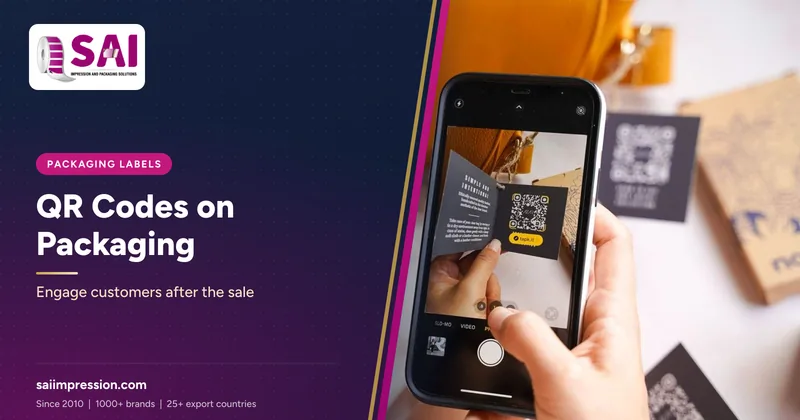
To use QR codes on packaging well, give shoppers a clear reason to scan, send each code to a fast mobile page that delivers exactly what the label promises, and print it large and sharp enough to scan first time. This matters more through 2027, as retailers move towards reading 2D codes at checkout and one well-built QR code can serve both the shopper and the till.
There are many benefits to using QR codes on packaging. It helps brands connect with consumers in creative ways. By simply scanning a code, customers can access product details, promotional offers, and even interactive content like videos or tutorials. This also helps brands stand out in a crowded marketplace.
Moreover, businesses can collect data through the QR scans which helps to better understand consumer preferences and tailor their offerings accordingly. So, acknowledging the importance of using QR codes, in this post, we will talk more about the exciting ways to effectively use QR codes on packaging labels to engage customers and enhance their experience.
Why Use QR Codes on Packaging?
QR codes, also known as Quick Response codes are 2-dimensional barcodes that can store a variety of information.
The QR Code was released in 1994 by DENSO WAVE in Japan, then a division of DENSO Corporation, and was adopted by the auto industry for its electronic kanban system, streamlining tasks from production to shipping. Today it is a powerful marketing tool used across industries. Unlike traditional barcodes, it can be scanned from any angle.
This is just one of the reasons that makes it effective while other benefits are discussed below:
- QR codes provide easy access to all the information related to the product which enhances the shopping experience. It also helps build trust and credibility with consumers who value transparency.
- These codes also engage the consumers by linking to interactive content such as videos, tutorials, etc.
- By incorporating QR codes on the packaging, brands can track and gather real-time data on consumer preferences and behaviors. This information is very helpful for refining marketing strategies and product offerings.
- QR codes also enable great customer interaction, providing quick access to customer support or product-related FAQs. This instant connection improves the overall experience, builds loyalty, and boosts satisfaction.
Need labels like these for your products?
Tell us your product, quantity and market. Our team replies with a clear quote within 24 hours, for orders in India and for export.
QR Codes, GS1 Digital Link and the 2027 Checkout Shift
Most packs today carry two codes: a linear EAN or UPC barcode for the till and a separate QR code for marketing. GS1 Digital Link lets a single QR code carry your product's GTIN, and optionally its batch number, serial number and expiry date, inside a web address. The same code can then open your content on a shopper's phone and be read at the retail point of sale.
Timing matters. Industry has set a goal that, by the end of 2027, all retail point-of-sale systems should be able to read a defined set of 2D barcodes with GS1 standards, in addition to existing linear barcodes. If you are redesigning labels now, get GTINs from your national GS1 organisation, build the QR code as a GS1 Digital Link, keep the linear barcode on pack, and test printed codes before a full run. Our barcode label printing and GS1 guide covers the basics.
QR codes also carry regulated information. In the EU, since 8 December 2023 wine producers may give the ingredients list and nutrition declaration through electronic means such as a QR code, while allergens and the energy value stay on the physical label. See our wine and spirits labels.
Creative Ways to Use QR Codes on Packaging
Now, it is already known that QR codes can help provide a wealth of information to consumers. However, it can be used in many other creative ways to engage people with your product.
Some of the ways are:
- Just like information, augmented reality features can be used such as interactive animations or 3D models. It can help create a fun and engaging experience that brings the product to life and captivates consumers.
- Prompt consumers that if they buy and scan the code on their product, there are chances that they might land a special offer or discount coupon. This encourages consumers as well as drives sales.
- Instead of written information, use animated video that shares the story behind the product like its sourcing, production process, or brand values. This will help captivate their attention and engage them. Also, if the product requires instructions for use, then also this video will help brands explain the same.
- If you are dealing with food products, then QR codes can be linked to recipes or serving suggestions using the product. This not only adds value but also encourages repeat purchases as customers explore new ways to use the product.
- To engage the consumers, brands can also start a lucky winner contest. In this people have to participate by registering their names on the site linked with a QR code.
How Brands Can Use QR Codes For Marketing?
QR Codes are an efficient tool for brands to use for their products as well as to engage consumers. However, it can also be used by businesses for their promotional and marketing activities.
Following are some ideas to do the same:
- QR codes can be linked directly to the customer feedback forms or surveys. This will help provide valuable insights and help brands improve their products and services.
- Businesses can also link QR codes to their social media pages. This will prompt consumers to engage with it by encouraging them to check the profile and follow for updates, or promotions. This will help build a stronger online presence and foster customer loyalty.
- QR codes can also encourage customers to sign up for loyalty programs. This simplifies the process of joining and encourages repeat business.
- Through QR codes, businesses can educate consumers about the sustainability practices related to the product or packaging.
- QR codes can be used to drive traffic to exclusive promotional offers or discounts, giving consumers an incentive to scan and make a purchase.
- By embedding QR codes on products, businesses can link to personalized recommendations based on consumer preferences, such as similar products or complementary items.
Best Practices for Maximizing Engagement
In order to make sure that everything goes well as anticipated in whatever way you choose to engage your customers, it is important to follow the best and most effective practices.
Here are a few essential points to consider:
- Add a concise CTA near the QR code. For instance, phrases like “Scan to Learn More” or “Uncover Exclusive Offers” inform users about what to expect which increases the likelihood of engagement.
- Ensure that the landing page linked to the QR code is mobile-friendly and visually appealing. It should include the relevant content which aligns with the expectations set by the CTA.
- Use Dynamic QR codes. This allows you to change the destination URL without altering the code itself. Make sure the redirect runs on a domain you control, so printed codes keep working if you change QR software providers.
- Before launching a campaign, thoroughly test your QR codes across different devices to ensure they scan correctly and lead to the intended content.
- Encourage immediate action by offering time-sensitive promotions or exclusive content accessible only through the QR code. This sense of urgency can motivate users to scan the code right away rather than postponing it.
- Place the QR code in easily noticeable areas on packaging or promotional materials. Avoid placing it on curved or hard-to-scan surfaces to ensure users can scan it with ease.
- Use analytics tools to monitor scan rates, user behavior, and engagement metrics. This data helps in future campaigns, increasing overall effectiveness.
Frequently Asked Questions
What size should a QR code be on a product label?
It depends on how much data the code holds and the print resolution. In DENSO WAVE's worked example, a Version 3 code holding 50 alphanumeric characters, printed at 400 dpi, needs a square of about 9.4 mm including the quiet zone. Shoppers scanning from a shelf need a larger code, so test printed proofs at real scanning distance.
Should I use a static or dynamic QR code?
A static code points to one fixed address. A dynamic code points to a short redirect you can update, which suits campaigns that change, as long as you control the redirect domain.
Will a QR code replace the barcode on my pack in 2027?
Not straight away. The industry goal is for retail point-of-sale systems to read 2D barcodes with GS1 standards by the end of 2027, in addition to existing linear barcodes, so keep your EAN or UPC barcode until your retailers confirm otherwise.
Does a marketing QR code need a GS1 barcode number?
No, a QR code that only opens a web page does not. If you want the same code to be read at checkout, it should carry your GTIN in the GS1 Digital Link format.
Leave a clear margin, or quiet zone, of four modules (the small squares that make up the code) on every side, as DENSO WAVE specifies.
Protect shoppers from tampered codes. The US Federal Trade Commission has warned that scammers have covered up genuine QR codes, such as those on parking meters, with codes of their own. Print the code as part of the label artwork rather than as a loose sticker, show your own short web address beside it, and consider tamper-evident labels for high-value products.
Wrapping Up
Incorporating QR codes into packaging offers a powerful way to engage customers and enhance their shopping experience. To make sure everything goes well, prioritize clear design, high contrast, and effective placement of QR codes on packaging.
Lastly, ensure that QR codes are large enough to be easily scanned. Codes that are too small or blurry can frustrate users and lead to scanning errors. After all, QR codes can provide the optimum results, if the businesses leverage their full potential effectively.
Sai Impression prints static and serialised QR codes, serial numbers and batch codes on self-adhesive labels through variable data printing, and can send free samples so you can test scanning before a full run.