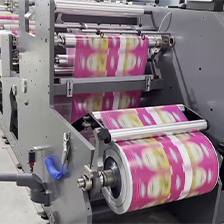
“Should we print digital or flexo?” is one of the first questions in any label project - and the honest answer is: it depends on your run length, artwork and deadline. Both processes produce excellent labels; they simply win in different situations.
How Each Process Works
Flexographic (Flexo) Printing
Flexo uses flexible photopolymer plates mounted on rotating cylinders - one plate per colour. Once plates are made and the press is set, it prints at very high speeds with extremely low cost per label. Plates are a one-time investment per design.
Digital Printing
Digital presses (toner or inkjet) print directly from the file - no plates, minimal setup. Every label on the roll can even be different, which enables variable data printing: serial numbers, unique QR codes and versioned designs.
Head-to-Head Comparison
| Factor | Digital | Flexo |
|---|---|---|
| Setup cost | Minimal - no plates | Plate cost per design/colour |
| Best run length | Short to medium (500-50,000) | Medium to very long (50,000+) |
| Cost per label at volume | Flat | Drops sharply with quantity |
| Turnaround | Fastest - print same week | Plate-making adds lead time |
| Design changes / versions | Free - change every label if needed | New plates per change |
| Variable data / QR serialisation | Native strength | Needs hybrid digital unit |
| Special inks & finishes | Growing (digital embellishment) | Mature: cold foil, screen whites, metallics |
| Long-run colour consistency | Very good | Excellent once locked in |
When Digital Wins
- Product launches and test markets - order 2,000 labels now, reorder when sales prove out.
- Many SKUs, small volumes each - 12 flavours × 3,000 labels beats 12 sets of plates.
- Seasonal or promotional versions - change artwork without re-tooling.
- Serialisation & anti-counterfeit - unique codes on every label, as in our variable data printing guide.
- Tight deadlines - no plate-making stage.
When Flexo Wins
- High-volume staple SKUs - once quantities cross roughly 50,000 per design, plate cost amortises and per-label price drops well below digital.
- Speciality inks and effects - dense opaque whites on clear film, metallic PMS colours, cold foil in-line.
- Long repeat programmes - same design printed monthly for years.
The smart answer is often both. Many Sai Impression clients launch on digital, then move proven SKUs to flexo as volumes grow - same materials, same colour targets, seamless transition. Ask us to model both costs for your quantities →
Quality: Can Buyers Tell the Difference?
On a well-run modern press - no. Both achieve sharp text, smooth vignettes and tight registration. The visible differences come from finishing choices (lamination, varnish, foil), not the printing process. See how we control quality end-to-end in our printing process.
FAQ
At what quantity does flexo become cheaper than digital?
As a rule of thumb, between 30,000 and 80,000 labels per design depending on size, colours and finishes. Below that range digital usually wins on total cost; above it flexo pulls ahead quickly.
Is digital label printing lower quality than flexo?
No. Modern digital presses match flexo for sharpness and colour on virtually all consumer applications. Very specific requirements - like ultra-opaque white on clear film - may still favour flexo or a hybrid press.
Can I switch from digital to flexo later without redesigning?
Yes. If your printer plans it upfront (colour targets, dielines, material), the same artwork transitions cleanly - this launch-on-digital, scale-on-flexo path is exactly how many brands manage growth.
Which process is better for short-run premium labels?
Digital printing plus offline embellishment (foil, screen, emboss) gives premium results at short-run economics - see our post on how premium labels are made.