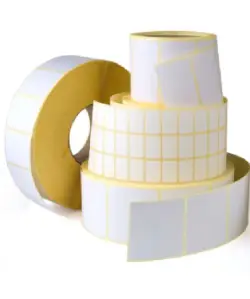
Every label starts with one fork in the road: paper or film? Get it right and nobody notices. Get it wrong and you meet wrinkled labels in the fridge aisle, torn corners in transit, or an inflated material bill for durability you never needed.
The Short Answer
Choose paper when the product lives dry and at room temperature - dry foods, boxed goods, wine (deliberately textured looks), logistics cartons. Choose film when the label meets water, oil, chemicals, squeezing or freezing - personal care, beverages, home care, frozen food, industrial products.
Side-by-Side Comparison
| Criterion | Paper Labels | Film Labels (BOPP/PE/PET) |
|---|---|---|
| Cost | Lowest | Moderate |
| Water/moisture | Weak - wrinkles, delaminates | Excellent |
| Oil & chemicals | Stains and softens | Resistant |
| Tear resistance | Low | High |
| Squeezable packs | Creases, cracks | Flexes with the pack |
| Print character | Warm, matte, tactile; uncoated textures | Bright, glossy or matte; clear no-label look |
| Premium finishes | Beautiful with foil/emboss (wine look) | Metallised and clear effects |
| Freezer performance | Poor unless speciality | Excellent with right adhesive |
| Sustainability story | Renewable fibre, recycled grades | Mono-material recyclability on plastic packs |
Where Paper Genuinely Wins
- Cost-sensitive dry goods: snacks in outer boxes, spices, stationery, cartons.
- Deliberate craft aesthetics: uncoated, textured and cotton papers give wine, coffee and artisanal brands a warmth film cannot fake - pair with foil and embossing as in our premium labels guide.
- Logistics & office: shipping labels, barcodes on cartons - see thermal printer labels.
Where Film Is Non-Negotiable
- Bathroom & kitchen products: shampoo, sanitiser, dish soap - condensation is guaranteed.
- Chilled & frozen foods: paper fails in the cold chain; films with freezer adhesive do not (why labels fail in cold storage).
- Squeezable containers: PE films flex thousands of cycles.
- Chemicals & lubricants: resistance plus mandatory durable warnings - see chemical & industrial labels.
- No-label-look beverages & cosmetics: clear film on glass/PET.
The Hybrid Option Most Brands Miss
Laminated or varnished wet-strength papers close part of the gap - surviving condensation rings and fridge humidity at paper-adjacent cost. They will not survive immersion or freezing, but for “occasionally damp” products they are the value pick. Ask your printer to sample both routes; details in our material selection guide.
Still torn? Send Sai Impression one line about your product’s life (storage, handling, moisture) and we will recommend paper, film or hybrid - with samples to prove it. Ask the material question →
FAQ
Are film labels always more expensive than paper?
The face material costs more, but thin-gauge BOPP has narrowed the gap substantially. Factor in spoilage and re-labelling avoided, and film is often cheaper in total for wet-environment products.
Which is more sustainable - paper or film labels?
It depends on the pack: paper labels suit paper/carton packs; PP film labels keep PP containers mono-material for recycling. Judge the pack as a system - details in our sustainable materials post.
Can paper labels be made waterproof?
Lamination or UV varnish makes paper splash- and condensation-resistant, not waterproof. Immersion, freezing and oily contact still require film.
Do paper and film print colours differently?
Yes - coated films render brighter, punchier colour; uncoated papers mute and warm the palette (often desirably). Ask for printed samples on both before finalising brand colours.