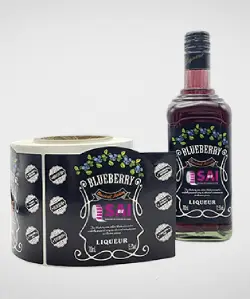
Walk down any supermarket aisle and most of the labels you see - on shampoo bottles, oil pouches, water bottles, detergent packs - are printed on BOPP film. BOPP stands for Biaxially Oriented Polypropylene, a plastic film that is stretched in two directions during manufacturing, giving it exceptional strength, clarity and moisture resistance at a very low cost per label.
In this guide we explain what BOPP labels are, the different types, where each performs best, and what you should tell your printer to get the right result the first time.
What Is BOPP Film?
Polypropylene is one of the most widely used plastics in packaging. When the film is biaxially oriented - stretched along both its length and width - its molecules align in a way that dramatically improves tensile strength, stiffness, transparency and barrier properties. The result is a thin, tough film (usually 25-40 microns for labels) that resists water, oils and most household chemicals.
For labelling, BOPP film is coated with a pressure-sensitive adhesive and supplied on rolls, ready for high-speed printing and automatic application. If you want a deeper look at how self-adhesive constructions work, read our guide on self-adhesive labels.
Types of BOPP Labels
1. White (Opaque) BOPP
The most common variant. A bright white face film that prints vivid colours and hides the container behind it. Ideal for FMCG products, food jars, chemical bottles and anywhere you would otherwise use paper but need water resistance.
2. Clear (Transparent) BOPP
Creates the popular “no-label look” on glass and PET bottles - the design appears printed directly on the container. Widely used for beverages, personal care and premium food products.
3. Metallised (Silver) BOPP
A metallic silver film that delivers a foil-like shine without foil-stamping costs. Perfect for lubricants, auto-care products and premium supplements. Printing white ink selectively lets you combine metallic and matte areas in one label.
4. Pearlised BOPP
A soft pearl-white sheen used for soaps, cosmetics and food brands that want a subtle premium finish.
Why Brands Choose BOPP Over Paper
| Property | BOPP Labels | Paper Labels |
|---|---|---|
| Water resistance | Excellent - no wrinkling or peeling | Poor unless laminated |
| Oil & chemical resistance | Very good | Low |
| Tear strength | High | Low |
| Squeezable containers | Conforms without cracking | Creases and cracks |
| Recyclability story | Compatible with PP containers | Depends on adhesive |
| Cost | Low-moderate | Lowest |
Common Applications of BOPP Labels
- Food & beverage: edible oil, water bottles, sauces, dairy - see our food & beverage labels.
- Home care: detergents, cleaners and floor care where moisture and chemicals are routine.
- Personal care & cosmetics: shampoos, lotions and gels on squeezable packs.
- Pharma & nutraceuticals: moisture-proof labelling for bottles and jars.
- Lubricants & agro-chemicals: oil-resistant, scuff-resistant metallised films.
Planning a BOPP label order? Sai Impression prints white, clear, metallised and pearlised BOPP labels with gloss, matt or soft-touch finishes. Get a free quote and material recommendation →
How BOPP Labels Are Printed
BOPP accepts flexographic, UV-offset and digital printing beautifully. A corona-treated or top-coated face ensures ink adhesion. Popular enhancements include:
- Lamination or UV varnish for scuff resistance on high-handling products
- Cold foil and screen effects for premium shelf impact
- Opaque white underprint on clear films so colours stay vivid on any container
Learn how we combine these processes on our label printing process page.
Choosing the Right Adhesive
The film is only half the story. Squeezable HDPE bottles need a flexible adhesive; chilled foods need an all-temperature grade; returnable glass may need a wash-off adhesive. Always tell your printer the container material, filling temperature and storage conditions.
FAQ
Are BOPP labels waterproof?
Yes. BOPP film itself is fully waterproof - it will not absorb water, wrinkle or disintegrate. For products stored in ice buckets or chillers, pair the film with an all-temperature adhesive so the bond stays strong too.
Are BOPP labels recyclable?
BOPP is a polypropylene (PP) film, so on PP containers it supports mono-material recycling. Many brands choose BOPP specifically to keep the pack and label in the same polymer family.
What is the difference between BOPP and PVC labels?
BOPP is thinner, more dimensionally stable, contains no chlorine and is generally preferred for food contact and sustainability. PVC is more conformable on very curved surfaces but is being phased out by many FMCG brands.
What is the minimum order quantity for BOPP labels in India?
With digital printing, runs as low as a few thousand labels are economical; flexo becomes cheaper at higher volumes. Share your annual usage with us and we will recommend the most cost-effective route.