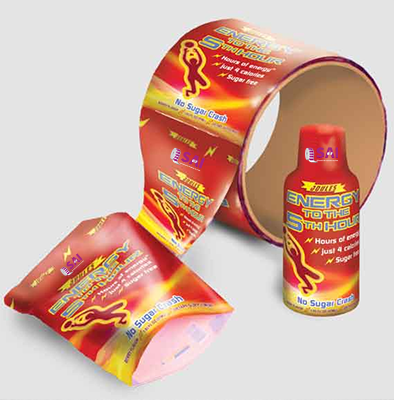
Shrink sleeves are the fastest-growing label format worldwide for a simple reason: they turn the entire container into the label. Printed on heat-shrinkable film and shrunk tight around the pack, they deliver 360° graphics, conform to shapes no pressure-sensitive label can handle, and add tamper evidence in the same pass.
But sleeves are not for everyone. Here are the seven categories where they genuinely outperform - and how to tell if your product belongs on the list. For the basics of the format, see our shrink sleeve labels page.
1. Beverages & Energy Drinks
The classic sleeve category. Full-body 360° graphics dominate the cooler shelf, condensation cannot peel a sleeve, and contoured bottles that defeat flat labels are exactly where sleeves shine. Combined neck-band tamper evidence is a free bonus.
2. Dairy, Yogurt & Functional Drinks
Small cups and bottles offer little flat real estate. A sleeve multiplies printable area 2-3×, fitting mandatory nutrition information plus strong branding on packs where a pressure-sensitive label could barely fit the logo.
3. Pharmaceuticals & Nutraceuticals
Tamper-evident perforated sleeves satisfy regulatory and consumer-trust demands at once - the seal must visibly tear to open the pack. Sleeves also give space for multilingual dosage text on small bottles. Related reading: FDA compliance in pharma labelling.
4. Home & Personal Care With Contoured Packs
Curvy shampoo bottles, waisted cleaner triggers, soft tubes - shapes designed to stand out are exactly the shapes flat labels wrinkle on. Sleeves conform to compound curves perfectly, as covered in our label wrinkling guide.
5. Sauces, Condiments & Squeeze Packs
Squeeze bottles flex constantly; sleeves flex with them. Steam, oil splashes and refrigeration cycles do not lift a sleeve the way they attack adhesive labels.
6. Confectionery, Gifting & Limited Editions
Sleeves print stunning metallics and can change artwork per season without touching the container stock - ideal for festival editions and collaborations. Pair with digital printing for short-run variants; see digital vs flexo.
7. Multipacks & Promotional Bundles
A single printed sleeve unifies two or more products into one branded, shelf-ready bundle - no glue, no cartons, and the bundle unwraps cleanly for the consumer.
Sleeve vs Pressure-Sensitive: Quick Check
| You need… | Best Format |
|---|---|
| 360° graphics on a shaped container | Shrink sleeve |
| Tamper evidence built into the label | Shrink sleeve |
| Maximum area on a small pack | Shrink sleeve |
| No-label look on straight-walled glass/PET | Clear pressure-sensitive |
| Fast SKU changes on existing bottles | Pressure-sensitive |
| Simple compliance/logistics labelling | Pressure-sensitive |
Considering the switch to sleeves? Sai Impression produces full-body and neck-band shrink sleeves with tamper perforation and premium finishes. Send us your container - we will sleeve a sample →
FAQ
What material are shrink sleeve labels made of?
Most sleeves are PET-G film (high shrink, crystal clarity); PVC remains in some low-cost uses and OPS/PLA serve special cases. PET-G is today’s default for quality and recycling-stream compatibility.
Do shrink sleeves work on square or oval bottles?
Yes - that is one of their core strengths. Artwork is pre-distorted digitally so logos and text look correct after the film shrinks around corners and curves.
Are shrink sleeves tamper-evident by default?
Full-body sleeves can extend over the cap with a perforated tear-band, making tampering visible. Neck-band-only sleeves provide the same assurance on packs that keep a separate body label.
What equipment do I need to apply sleeves?
Production lines use a sleeve applicator plus a steam or hot-air shrink tunnel. For small volumes, semi-automatic applicators and compact tunnels work - ask us about options matched to your throughput.