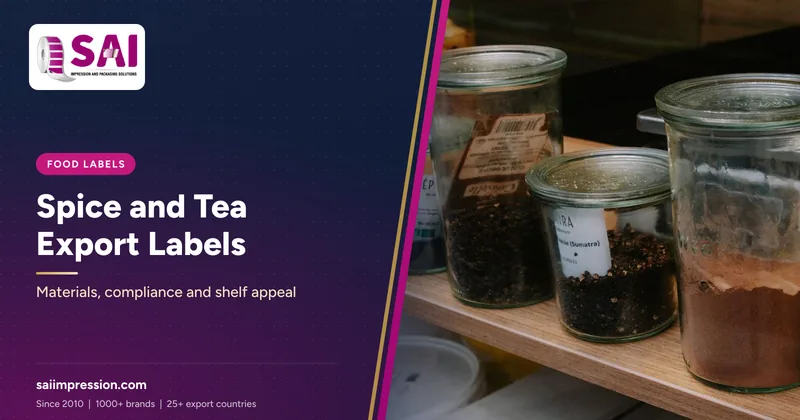
India and Sri Lanka supply much of the world's spices and tea. On a shelf in Dubai, London or Toronto, though, an excellent product can look tired if the label has absorbed turmeric oil, wrinkled in humidity or faded under shop lights. For exporters, the label is the last thing the buyer sees and the first thing they judge.
This guide is for spice and tea exporters, packers and importers. It covers the label materials that survive oily spices and long voyages, the information destination markets expect and the finishes that make premium blends stand out.
Short answer: use laminated BOPP film labels with a permanent acrylic adhesive for spice jars and pouches, because they resist oils, moisture and abrasion. Use coated paper or film for tea cartons and caddies. Print every mandatory detail required by the destination market, including allergens, net weight, dates, origin and importer details, and add finishes such as foil or embossing for premium ranges.
Key takeaways
- Oily spices such as chilli, turmeric and masala blends stain uncoated paper. Laminated film labels prevent it.
- Tea is sensitive to moisture and odours, so packaging protects the product and the label protects the brand.
- Each destination market has its own label rules. Agree content with your importer before printing.
- Premium finishes justify premium prices in gifting and specialty retail.
Why spice and tea labels fail in export
- Oil staining: essential oils in spices migrate into paper labels and leave dark patches.
- Humidity damage: paper labels wrinkle and lift during monsoon storage and sea freight.
- Abrasion: cartons rubbing together in transit scuff unprotected print.
- Fading: bright reds and yellows fade under strong shop lighting without UV-resistant inks or lamination.
- Poor adhesion on pouches: stiff labels on flexible stand-up pouches crease and peel.
Choosing the right label material
| Pack format | Recommended label | Why |
|---|---|---|
| Glass or PET spice jars | Laminated white or clear BOPP | Oil, moisture and scuff resistance with a premium look |
| Stand-up pouches | Conformable film with strong adhesive | Flexes with the pouch without creasing |
| Tea cartons and boxes | Coated paper or film with varnish | Sharp colour at good value |
| Tea caddies and tins | Metallised or foil-finished film | Premium shelf appeal for gifting |
| Bulk sacks and cartons | Paper or film shipping labels | Clear identification through ports and warehouses |
For a deeper comparison, see our guides to paper vs film labels and waterproof and oil-resistant labels. If your products ship through hot and humid regions, read labels for hot and humid climates.
Information destination markets expect
Every market sets its own rules, but buyers almost always check the same core items:
- Name of the product and, for blends, an ingredients list in descending order
- Allergens such as mustard, celery and sesame, emphasised where the market requires it
- Net weight in metric units, with US customary units added for the US market
- Best-before date and batch number
- Country of origin, for example "Product of India" or "Product of Sri Lanka"
- Name and address of the importer or responsible business in the destination market
- Storage instructions such as "store in a cool, dry place"
Market-specific details matter. The UK requires allergen emphasis and a UK business address, explained in our UK food label guide. The Gulf requires Arabic content and specific date formats, covered in UAE and GCC label requirements. Canada requires bilingual English and French labels.
Origin marks and export registration
Spice exporters in India register with the Spices Board, and tea exporters work with the Tea Board of India. In Sri Lanka, the Lion logo for Ceylon Tea is controlled by the Sri Lanka Tea Board and may only be used on qualifying 100 percent Ceylon tea under its rules. If you use any origin or certification mark, keep the artwork version approved by the scheme owner and print it exactly to their specification.
Exporting spices or tea?
Send us your jar, pouch or carton sizes and destination markets. We will recommend oil and moisture resistant label builds and quote within 24 hours.
Design that sells spices and tea abroad
Diaspora shoppers look for familiar brands and authentic cues. Mainstream shoppers in the UK, Canada or the Gulf need clarity: what the product is, how to use it and why it is worth the price.
- Lead with the product name in English: add regional names in a secondary line for authenticity.
- Use colour to signal heat or blend: consistent colour coding helps shoppers navigate a range.
- Show origin with pride: estate names, regions and harvest details build trust.
- Add usage cues: a short serving suggestion helps new customers buy with confidence.
- Use premium finishes for gifting: foil, embossing and tactile varnishes signal quality.
For finishing ideas, read foil vs standard labels and see our case study on cold foil premium labels for an agro brand.
Packaging rolls and pouches
Many spice and tea packers run form-fill-seal machines. Alongside labels, Sai Impression prints PE-coated paper pouch rolls for sachets and pouches, so your packaging and labels can come from one supplier with matched colours.
How Sai Impression supports spice and tea exporters
Sai Impression has printed labels in Chennai since 2010 for more than 1000 brands and ships to over 25 countries. Being close to Chennai port and airport makes us a practical partner for exporters across South India and Sri Lanka. We print on paper, BOPP and specialty films with Pantone-matched colours, lamination and premium finishes, and dispatch standard jobs in as little as 5 days after artwork approval. Explore our food and beverage labels.
Frequently asked questions
What is the best label material for spice jars?
Laminated BOPP film with a permanent acrylic adhesive. It resists the oils in spices, handles moisture and keeps colours bright, which matters on long export journeys.
Do spice labels need allergen information?
In many markets, yes. Mustard, celery and sesame are regulated allergens in the UK and EU, and blends may contain gluten or nuts. Check your recipes and the destination market's rules.
Can I use the Ceylon Tea Lion logo on my label?
Only under the Sri Lanka Tea Board's rules, which generally require 100 percent Ceylon tea packed in Sri Lanka. Confirm eligibility with the Tea Board before printing it.
How do I stop labels creasing on stand-up pouches?
Use a thin, conformable film facestock and apply the label to a flat area of the pouch before filling where possible. Stiff paper labels crease when the pouch flexes.
Can you print labels in Arabic or French for export?
Yes. We print multilingual labels from your approved artwork. We recommend that a native speaker or your importer checks translations before final approval.
Give your spices and teas the label they deserve
Tell us your products, pack formats and markets. We will help you choose materials and finishes that survive export and sell on shelf.
Sources and further reading: Food Safety and Standards Authority of India (FSSAI), Tea Board of India, Sri Lanka Tea Board.