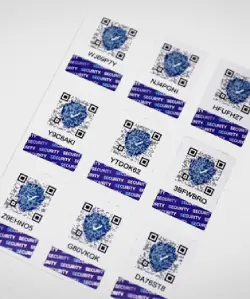
Counterfeiting is not a luxury-goods problem anymore. Lubricants, cosmetics, agro-chemicals, liquor, auto parts and even cement face organised fakes across India - and the first victim is the label, because the label is what shoppers trust.
The good news: modern label technology gives brands layered defences that are cheap for you and expensive for counterfeiters. Here is the current toolkit, from visible deterrents to digital verification.
Layer 1: Overt (Visible) Features
Holograms & Holographic Films
Instantly recognisable, hard to reproduce well. Registered holographic strips, patches or full holographic labels give shoppers a quick authenticity cue. Custom-origination holograms (your artwork, not stock patterns) are dramatically harder to fake.
Colour-Shift & Optically Variable Inks
Ink that changes colour with viewing angle - familiar from currency. Cheap to verify (tilt the pack), costly to imitate.
Premium Finishes as Passive Defence
Embossing, cold foil, screen textures and complex finishes raise the counterfeiter’s cost floor. A label that takes four processes to make does not get faked casually - a hidden benefit of the techniques in how premium labels are made.
Layer 2: Tamper Evidence
VOID / Destructible Materials
Peel a VOID label and it leaves a “VOID” pattern or shreds into fragments - resealing and refilling become visible instantly. We deployed this for a pharma exporter in our tamper-evident pharma case study.
Seals, Neck Bands & Perforated Sleeves
Carton seals and perforated shrink neck-bands make first-opening unambiguous - a must for consumables; consumer-trust angle covered in our tamper-evident food labels post.
Layer 3: Covert (Hidden) Features
- UV-fluorescent inks: invisible marks that glow under a UV torch - field-inspection friendly.
- Microtext: text readable only under magnification; photocopies destroy it.
- Guilloché patterns: fine security line-work that scanners and copiers blur.
Layer 4: Digital Verification (The Game Changer)
Serialized unique QR codes - every unit distinct, verified against a server on scan. Duplicate or unknown codes flag fakes in real time, and scan analytics map where counterfeits and grey-market goods surface. Implementation details in our VDP use-cases post and the nutraceutical serialization case study.
Building Your Stack: A Practical Recipe
| Risk Level | Recommended Stack |
|---|---|
| Low (emerging brand) | Premium finish + tamper seal |
| Medium (regional counterfeits seen) | + serialized QR verification |
| High (organised faking) | + hologram/OVI + covert UV/microtext + field kits |
| Regulated exports | + GS1 DataMatrix traceability per unit |
The principle: combine one overt, one tamper, one covert and one digital layer. Each layer catches what the others miss.
Facing counterfeits in your market? Sai Impression builds layered security labels - VOID materials, holographic elements, UV marks and serialized QR - matched to your risk and budget. Design your defence →
FAQ
What is the most effective anti-counterfeit label technology?
No single feature - layering is what works. Serialized QR verification gives the strongest detection, but pairing it with tamper evidence and a visible security cue is what deters counterfeiters in practice.
How much do security labels cost compared to normal labels?
Tamper materials and serialized QR typically add a small premium per label - far below the margin lost to fakes. Holograms and OVI inks cost more and are usually reserved for higher-risk SKUs.
Can consumers really verify products themselves?
Yes - scan-to-verify QR requires no app beyond the camera. Brands see meaningful consumer scan rates when the label invites verification clearly (“Scan to check authenticity”).
Are holograms still worth it now that QR verification exists?
Yes, as the instant visual layer: shoppers recognise a hologram in one second without scanning anything. Digital verification catches what eyes cannot; holograms deter at the shelf.